Luxury Charter Costs
Booking a luxury yacht charter is a significant investment, and understanding exactly what you’re paying for can sometimes feel overwhelming. While the advertised weekly charter rate is often the first figure prospective charterers see, it rarely represents the total cost of the experience.
The good news is that the additional expenses shouldn’t come as a surprise. With the guidance of an experienced yacht charter broker and careful planning before your trip, you can budget confidently, avoid unnecessary spending, and enjoy every moment onboard knowing exactly what to expect.
What Determines Luxury Yacht Charter Prices?
Every luxury yacht charter is unique, which is why yacht charter pricing varies considerably from one yacht to another. The advertised weekly rate reflects a combination of factors, including the yacht’s size, age, pedigree, onboard amenities, crew, destination, and the time of year you choose to travel.
Larger yachts naturally command higher charter rates because they require larger crews and have greater operating costs, while newer yachts or those offering premium features such as beach clubs, wellness facilities, cinemas, or an extensive collection of water toys will also sit at the upper end of the market.
Seasonality also plays a significant role. Chartering in the Mediterranean during July and August or in the Caribbean over the festive season will generally be more expensive than travelling during quieter periods when availability is greater.
While these factors determine the advertised charter fee, they are only the starting point when calculating your overall yacht charter costs.
Why the Advertised Weekly Rate Isn’t the Final Price
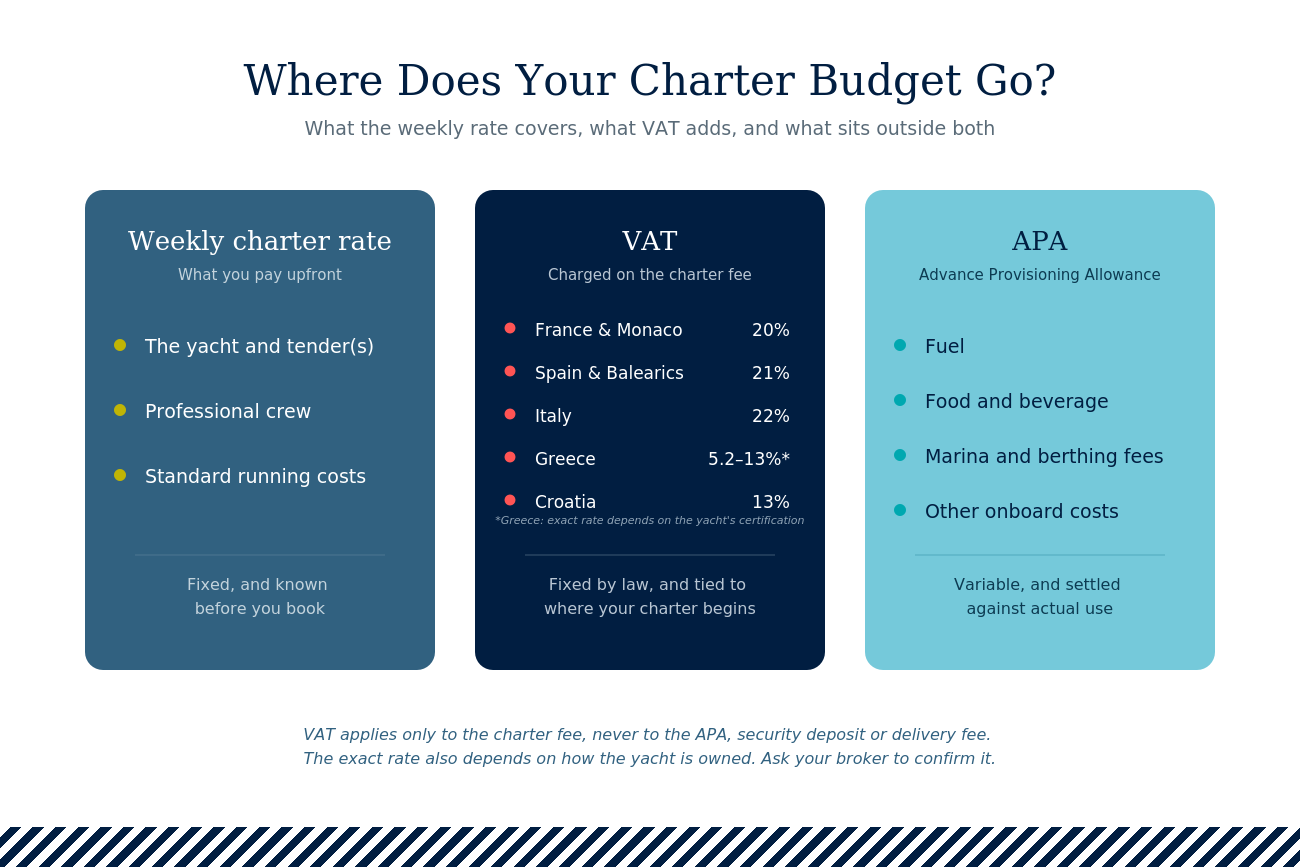
At Moncada, one of the biggest misconceptions we see is believing that the published weekly charter rate covers every expense during your holiday. In reality, the charter fee primarily covers the yacht, its crew, and their standard operating costs. Beyond that, there are several variable expenses that depend entirely on how you use the yacht throughout your charter.
From our experience, the two costs that have the greatest impact on the final budget are fuel consumption and port berthing fees. Fuel costs vary according to the itinerary. Spending several days enjoying one beautiful anchorage will naturally use far less fuel than cruising between multiple destinations every day. Larger motor yachts also consume considerably more fuel whenever they are underway.
Similarly, marina and berthing fees differ depending on where you choose to moor. Popular ports across the French Riviera, Italy, Croatia, or the Balearic Islands often attract premium berthing rates during the busiest months of the season.
Most yacht charters also operate using an Advanced Provisioning Allowance (APA), which covers variable expenses such as fuel, food, beverages, marina fees, and other costs incurred during the charter. We return any unused APA to you at the end of the trip, and settle any additional expenditure beyond the allowance afterwards.
What About VAT?
VAT is another addition worth planning for, and one of the easiest to miss. It applies only to the charter fee itself, never to the APA, the security deposit or the delivery fee.
The rate depends on where your charter begins. Currently, that means around 20% in France and Monaco, 21% in Spain and the Balearic Islands, 22% in Italy, and 13% in Croatia. Greece is calculated differently, depending on the yacht’s certification.
How VAT applies can also depend on the yacht’s ownership structure. This might mean the owning entity holds intra-community VAT registration within the EU, or that the yacht is privately owned. This is exactly the kind of detail an experienced broker checks before a quote ever reaches you. As rules vary by itinerary and ownership, we always confirm the exact figure before you book.
Understanding these costs before booking allows you to budget realistically and enjoy your holiday without unexpected surprises.
How Your Preferences Influence Yacht Charter Costs
One area that many first-time charter clients overlook is how much influence they have over their own spending. We always encourage our clients to complete their Preference List with as much detail as possible. The more precise you are about the wines, spirits, soft drinks, and delicacies you’d genuinely like onboard, the easier it is for the chef to provision accurately.
It’s surprisingly common for guests to provide very broad requests, which often results in more food and drink being purchased than is actually needed. Not only can this lead to unnecessary food waste, but it can also place unnecessary pressure on your APA budget. By telling us exactly what you’d like, and in realistic quantities, the crew can tailor provisioning specifically to your group. You’ll still enjoy an exceptional dining experience, but without paying for supplies that may never be used. Good planning before departure doesn’t reduce the quality of your charter; it simply ensures your budget is spent where it matters most.
Why Planning Your Itinerary Can Save Money
Another piece of advice we regularly give clients is to define a draft itinerary before departure and, where weather conditions allow, stick to it. Doing this enables the captain to calculate a much more accurate estimate of your fuel consumption before the charter begins, helping you understand your likely expenses from the outset.
During the charter itself, it’s tempting to make spontaneous changes and visit several different locations in a single day. While flexibility is one of the greatest advantages of chartering a yacht, frequent itinerary changes can quickly increase fuel consumption. Even travelling just a few miles requires the yacht’s engines to start, and on larger motor yachts this can have a noticeable impact on fuel usage. The same principle applies onboard. If meals are cancelled or changed at the last minute, the chef may already have purchased fresh ingredients specifically for your plans.
By sticking as closely as possible to your agreed itinerary and dining schedule, the crew can prepare more efficiently, minimise waste, and help you make the most of your APA. Ultimately, thoughtful planning creates a smoother experience for everyone onboard while helping you manage your yacht charter costs more effectively.

What Can You Expect at Different Budget Levels?
Every charter budget offers something unique, and choosing the right yacht is about finding the best fit for your priorities rather than simply selecting the most expensive option.
Entry-level charters provide beautifully maintained crewed yachts, comfortable accommodation, personalised service, and access to spectacular cruising grounds. As budgets increase, guests can expect larger yachts, more generous living spaces, additional water toys, and increasingly personalised service from larger professional crews.
At the very top of the market, superyachts offer a different scale of living aboard, with expansive beach clubs, spas, gyms, cinemas, multiple tenders, and crews dedicated to a holiday shaped entirely around their guests.
Whatever your budget, our role at Moncada is to help you understand exactly what you’re paying for, explain the additional costs you should expect, and recommend the yacht that delivers the greatest value for your investment.
Plan Ahead for a Better Charter Experience
Yacht charter pricing isn’t simply about comparing weekly rates; it’s about understanding the complete picture. At Moncada, we believe the best charter experiences begin long before you step onboard. By helping clients understand fuel consumption, marina fees, provisioning, and the role of the APA, we ensure there are no unnecessary surprises along the way.
Our advice is simple: define your itinerary early, complete your preference list with as much detail as possible, and work closely with your broker throughout the planning process. These small steps allow the captain and crew to prepare efficiently, reduce unnecessary spending, and create a charter experience that’s tailored to your expectations.
With the right planning and expert guidance, you’ll enjoy not only a charter that runs smoothly, but also the confidence of knowing your budget has been managed wisely.
Page updated on 19 October 2026